ASW Helicopter Procurement for the Philippine Navy

An AW159 in flight. Photo courtesy of Cpl Kellie Williams, RLC/MOD thru Wikipedia Commons

The Department of National Defense (DND) recently announced the allocation of P5.4 Billion (USD 120 million using the Exchange Rate of USD 1 = P 45) for 2 brand-new Anti Submarine Warfare (ASW) Helicopters for the Philippine Navy (PhN), and they expect the acquisition process for these helicopters to be completed within the year.[1] The news item says that the 2 ASW Helicopters will be assigned to the Del Pilar-class ships, but I am not sure about the accuracy of this as we do have 2 brand-new Frigates which will be needing helicopter support also, hence it makes more sense to assign these units to those Frigates. It is possible that if the helicopters arrive first, they will initially be assigned to the Del Pilar-class ships, but will eventually be moved to the new Frigates once those arrive.

The budget of USD 60 million per helicopter came as a bit of a surprise for me mainly because first, I found it a bit high. At that budget, each helicopter will be almost twice the price of the FA-50 Fighting Eagle Advanced Jet Trainer (AJT) we are getting which is valued at only USD 35 million each.[2] Second, it seems that while we are getting top-of-the-line ASW Helicopters, there doesn't seem to be any effort to get any sonar equipment for the Del Pilar-class ships, while the sonar requirement for the 2 new Frigates are only generally/loosely defined or not very specific.[3]

Missile Boat Naval Battle Lessons

A Saar 4 class Missile Boat of the Chilean Navy, the same type that performed very well during the Yom Kippur War. Photo courtesy of Wikipedia Commons

I decided to write about modern Missile Boat naval battles because it is not a common topic, you are more likely to read or watch topics involving wars like World War 2, or the Vietnam War, etc. than topics like this. Part of the reason its not so common is probably because modern naval engagements don't last very long, usually only days, hence you can't generate a lot of material about them unless you collect them up like what I'm doing now. As to why the topic of Missile Boats, its because these boats are smaller and cheaper than other naval platforms out there like Submarines, Frigates, etc. and thus acquiring them would be a cost-effective way of modernizing our navy.

But first, what is a “Missile Boat”? Wikipedia defines it as, “a small warship armed with anti-ship missiles”. That's a pretty general term as it doesn't really specify what “small” means. For me, though, it means ships which are under 1,000-tons as we do need to draw a line somewhere. This will also mean covering missile-armed crafts usually described as “Corvettes”, though, but I will be referring to them as Missile Boats also. The term “Fast Attack Craft” can also be used, but it is a more general term in that it can also be used to describe ships armed with other weapons like Torpedoes or guns-only, while there is no mistaking what a Missile Boat is supposed to be armed with.

Philippine Navy New Frigate Acquisition Timeline

(Updated September 2, 2017. See bottom of the page for the complete revision history)
A Sigma 10514 Frigate. Hopefully we will get something as beautiful as this. Photo courtesy of the Naval Open Source Intelligence Website

Below is the approximate timeline of the acquisition of the two brand-new Frigates by the Philippines arranged from the latest to the previous news. It's not meant to be comprehensive, just the major developments during the acquisition of the aircraft.

I will be updating this post every time an important, new development occurs regarding the Frigate acquisition. For quick reference, just look for it on the "Timelines" category on the "Categories" section on the Side Bar.

Philippine FA-50 Fighting Eagle Acquisition Timeline

Revised June 09, 2016. See bottom of the page for the complete revision history

An FA-50PH with Tail Number 002 currently undergoing qualifications prior to its delivery to the Philippines

Below is the approximate timeline of the acquisition of the FA-50 Fighting Eagle by the Philippines arranged from the latest to the previous news. It's not meant to be comprehensive, just the major developments during the acquisition of the aircraft.

I will be updating this post every time an important, new development occurs regarding the FA-50 Acquisition. For quick reference, just look for it on the "Timelines" category on the "Categories" section on the Side Bar.

****************************

* April 17, 2016
The first two FA-50PHs of the Philippine Air Force joined its first major Military Exercise in the “Exercise Balikatan 2016” where it performed a simulated interception on two Hawker Hunters asking as aggressors while being supported by an Airborne Warning and Control System (AWACS) aircraft of the United States Air Force (USAF).
(Source: FA-50PHs gave impressive showing during 'Balikatan' exercises -- PAF spokesperson)

Up-Arming the MPACs for the Anti-Ship Role

A Mk2 Multi-Purpose Attack Craft (MPAC). Photo courtesy of the ASEAN News Website

The Multi-Purpose Attack Crafts (MPACs) are some of the Philippine Navy's (PhN) newest ships, and were first built by the Taiwanese company "Lung Teh Shipbuilding" and then by the Philippine company "Propmech Corporation". The MPAC is a type of "Fast Assault Craft" that can reach speeds of up to 40-45 knots, carry 16 fully equipped soldiers (along with 2 officers and 3 crewmembers), and then land the soldiers on the beach by virtue of its shallow draft and water jet propulsion system. It has an aluminum hull and a range of around 560km.[1]

The first 3 Lung Teh built ships are considered as the Mk1 versions delivered in 2009, while the next 3 Propmech built boats designated as the Mk2 versions were delivered in 2012. The Mk2 was redesigned as per the lessons learned from operating the Mk1 ships, and the most obvious difference between the two is the design of the Pilot House and placement of Machine Guns. Another 3 MPACs are on order by the PhN, and these will likely be designated as Mk3s.

Blog Output Slowdown

Slow Down Photo courtesy of Grist.org

I have been releasing a blog at an average of one per week the last couple of months, but I will be slowing down a bit from hereon to around a blog every 10 days, maybe even slower after that.

The reason is that first, the Armed Forces of the Philippines (AFP) Modernization is slowing down also, and I am running out of interesting stuff to write about. Second, I've covered a lot of ground already with over 50 blogs, so there may not be a lot left to discuss. Third, I need even more time to do other stuff than I have now, and these blogs are eating a bit too much of my time. The blogs are not easy to write, they involve a lot of thinking, research, more writing and re-writing … I apologize for the regular readers out there as it will mean less material for them to read on a regular basis, but I'm taking a bit of a break.

I may start blogging more frequently again if very interesting stuff comes up, but in the meantime just visit the site every now and then and take note of announcements of upcoming blogs on the Sidebar. I encourage everyone to follow my "Philippine Defense News" page on Facebook or on Twitter for more frequent updates (usually daily) about news related to Philippine defense. Thanks for reading my blogs, I highly appreciate it.


100,000 Page Views!!!

USD 100,000 Bill. Photo courtesy of Wikipedia

My rhk111's Military and Arms Page blog hits an important milestone today after hitting 100,000 page views in only 8 months, exceeding all of my humble expectations. I would like to thank all of you for your patronage, I will continue to blog as long as I have the time to do so and as long as there are interesting topics to blog about. Please continue reading my blogs, I highly appreciate it.


The AT-802U Air Tractor versus the A-29B Super Tucano

An AT-802U Air Tractor. Photo courtesy of Aerofossile2012 thru Flickr

Aside from the AT-6B Texan II, another aircraft worth considering in the turboprop Light Attack Aircraft market is the AT-802U. This aircraft is interesting because it made claims about long endurance, high payload and excellent ballistic protection to make it a good candidate for the Philippine Air Force's (PAF) planned Close Air Support (CAS) acquisition. Hence in this blog, I will be comparing it to the established leader of the turboprop attack aircraft market, the A-29B.

'Aircraft Backgrounds'
The EMB314 or A-29 is made by Brazil's "Embraer" company, it is a turboprop aircraft designed for light attack, Counter Insurgency (COIN), CAS and Aerial Reconnaissance missions in low threat environments, and also for Pilot Training. It is based on the EMB312 Tucano Trainer aircraft, but has a longer fuselage, more powerful engine and strengthened airframe. It first flew in 1999, and since then over 170 aircraft has been built and went into service in 11 countries around the world. The A-29B is the two-seat version of the aircraft, and its official nickname is the "Super Tucano".1

The Tejas Mk1 versus the Kfir Block 60

A Tejas Mk1. Photo courtesy of Edar Amarkar

The Indian manufacturer of the Tejas aircraft recently announced that it is pegging the price of that aircraft at USD 26 million,1 which puts it near the price range of the Kfir Block 60 which is selling at USD 20 million. The relatively low price of the Tejas means it is more affordable for our budget-conscious Air Force and thus worthy of consideration, hence I am starting this informal evaluation of the Tejas by comparing it to the Kfir Block 60.

'Aircraft Background'
The Kfir is based on the Mirage III/5 delta-winged aircraft whose blueprints were stolen by the Mossad (as is now detailed in various spy books and articles2), and is described as an all-weather, Multi-Role Fighter aircraft. It was made by the Israel Aircraft Industry (IAI) and first entered service in 1975, seeing extensive combat duty with the Israeli Air Force before finally being retired by the IAF in 1996.

The Philippine Army's Airtronic RPG-7USA and Sight Options

An RPG-7USA. Photo courtesy of the X-Box Experts Blog

So the Philippines finally goes over to the "Dark Side" and acquires the RPG-7s for its infantry soldiers to replace its M18 and M67 Recoilless Rifles.1 This is a very positive development indeed, as not only are we acquiring these more sophisticated equipment, we are also getting MORE of them. The Philippine Army (PA) currently has approximately 186 90mm M67 and 26 57mm M18 Recoilless Rifles,2 and in place of these the Army will acquire 400 RPG-7USA.

'Equipment Background'
"RPG-7" stands for "Ruchnoy Protivotankovye Granatomyot" in Russian which means "Hand-held, Anti-Tank Grenade Launcher". But personally I prefer the term, "Rocket-Propelled Grenade Launcher" to describe it as I feel it describes it better. The weapon consists of a reloadable launcher made of a steel tube which is mounted on the shoulder, and a projectile which is launched from the tube using a small gunpowder charge. Once the projectile has travelled 10 m away from the tube, the rocket motor ignites propelling the round faster and further up to 920 m before it self-destructs if it doesn't hit a target by then.

The Kfir Block 60 versus the SU-30MKK Flanker-G

A Kfir C12. Photo courtesy of Nicholas Peterman thru Airliners.net

I have already discussed my reservations about the Kfir Block 60 aircraft in a previous blog,1 but the Kfir will always be a darkhorse for any plans for the Philippines to buy a main combat aircraft because of its low price, a huge consideration for a budget-conscious air force like ours. This blog will focus more on how it matches up with the main threat that it would be facing in our air force as of now, the SU-30MKK, if we do end up buying the Kfir in the near future.

'Aircraft Background'
The Kfir is based on the Mirage III/5 delta-winged aircraft whose blueprints were stolen by the Mossad (as is now detailed in various spy books and articles2), and is described as an all-weather, Multi-Role Fighter aircraft. It was made by the Israel Aircraft Industry (IAI) and first entered service in 1975, seeing extensive combat duty with the Israeli Air Force (IAF) before finally being retired in 1996.

The A-29B Super Tucano versus the AT-6B Texan II

Revised January 20, 2014. See bottom of the page for the complete revision history

An AT-6B Texan II. Photo by Airwolfhound thru Flickr

The Philippine Air Force (PAF) is actively looking for a new Close Air Support (CAS) aircraft to replace its aging fleet of OV-10 Bronco Aircraft. Not a lot of details have been released to the public, just that they intend to get half a dozen aircraft (6) and that procurement will be thru Foreign Military Sales (FMS).1 We don't exactly know which aircraft the PhAF are considering, but right now there are two aircraft of this type that has been competing actively against each other for awhile now, and that is the A-29B Super Tucano and AT-6B Texan II. There are a LOT of materials in the internet comparing these two aircraft, and you can now add this one as my take on the matter.

'Aircraft Backgrounds'
The EMB314 or A-29 is made by Brazil's "Embraer" company, it is a turboprop aircraft designed for light attack, Counter Insurgency (COIN), CAS and Aerial Reconnaissance missions in low threat environments, and also for Pilot Training. It is based on the EMB312 Tucano Trainer Aircraft, but is has a longer fuselage, more powerful engine and strengthened airframe. It first flew in 1999, and since then over 170 aircraft has been built and went into service in eleven countries around the world. The A-29B is the two-seat version of the aircraft, and its official nickname is the "Super Tucano".2

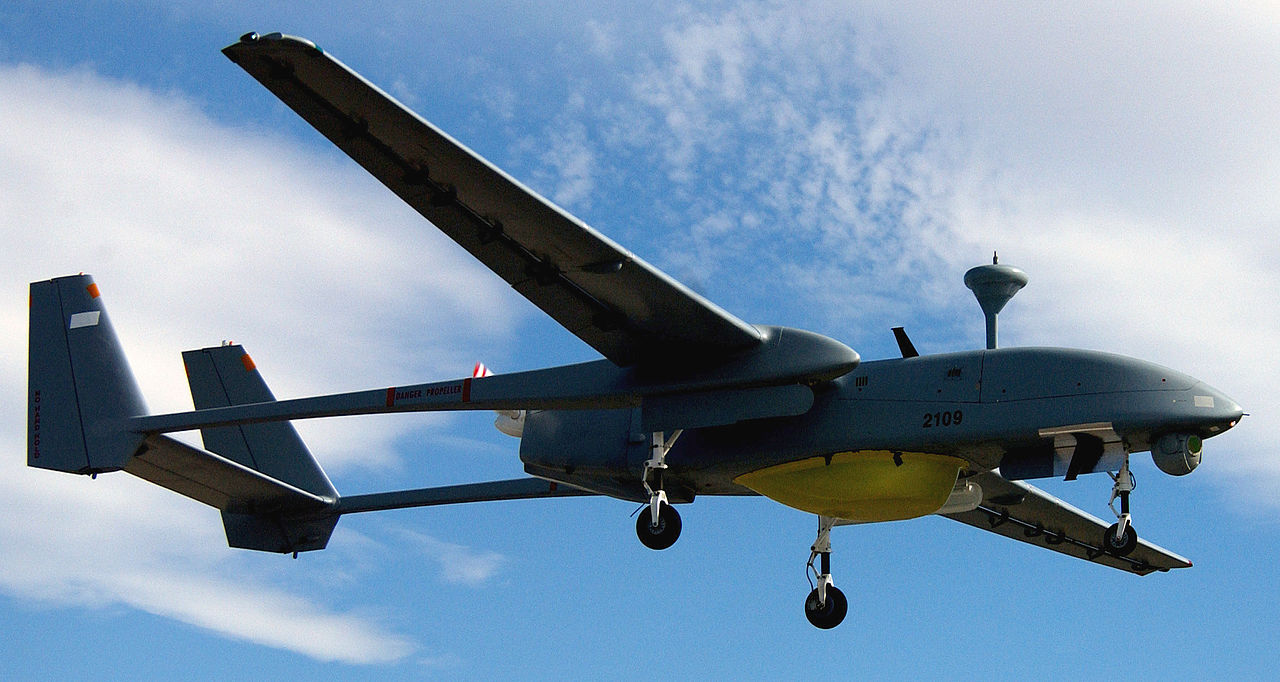
Airborne Targetting Support for the Philippine Army's Anti Ship Missiles

An IAI Heron UAV with Surface Search Radar and a FLIR Ball Turret. Photo courtesy of Wikipedia

If the Philippine Army (PA) does push thru with its plan to acquire shore-based Anti-Ship Missiles (AShM),1 and if these missiles will have ranges of 150-200 km as per the RAND Corporation's recommendation,2 then it will ALSO will needing AIRBORNE ASSETS to enable them to make use of the maximum ranges of those missiles due to the issue of RADAR HORIZON.

'Radar Horizon Issue'
I wrote a blog about the issue of the "Radar Horizon" a couple of years ago titled, "Radar Detection and The Horizon Distance". In summary, it basically means that since the Earth is round, it limits our ability to see objects over distance even when using radar because that object will eventually be hidden by the curved surface of the Earth. The Radar Horizon is affected by two things:
- The height of the object being observed;
- And the height of the equipment being used to observe the object.

Happy New Year 2014

Happy New Year to all the reader of this blog!!! Looking forward to an even MORE fruitful Armed Forces of the Philippines (AFP) Modernization this coming 2014.

Happy New Year Photo courtesy of the HD Wallpapers Website


Shore-Based Anti-Ship Missiles for the Philippine Army

A Naval Strike Missile (NSM) in action. Photo courtesy of the Kongsberg Website

Attorney Patrick Velez, the Vice Chairman of the Bids and Awards Committee of the Department of National Defense (DND) revealed to the Press recently more details about one of the missile systems that the country plans to acquire.1 According to Mr. Velez, the system will be:
- Shore and missile based
- Worth P6.5 Billion (or USD 144 million at USD 1 - P 45 exchange rate) for a dozen launchers, or around USD 12 million each
- Used to hit ground and naval targets
- Will be placed under the control and supervision of the Philippine Army (PA)
- Will be sourced thru Limited Source Bidding where only certain companies are selected and invited to bid on the project

Even if Atty. Velez specified that the missile will be used for "ground and naval targets", I feel NAVAL targets will get precedence here because they are high value targets, and China will have to go via sea using ships since these are the ones that has the logistical capacity requirement to successfully mount any type of invasion of our shores.

Merry Christmas to Everyone!!!

A very Merry Christmas to all the readers of this page!!!
A "Christmas Tank". Photo courtesy of the Tank Lovers Group websit
A "Christmas Tank". Photo courtesy of the Tank Lovers Group website


The FA-50 Golden Eagle versus the M-346 Master

An M-346 Master. Photo courtesy of DXBSpotter thru Flickr

With the possibility of the Philippine government and Korea Aerospace Industries (KAI) not agreeing to terms for the purchase of the FA-50 looming,1 it is time to take a look at other alternatives for the FA-50 in case the deal really doesn't push thru. The main rival of the FA-50 / T-50 series in the Advanced Jet Trainer (AJT) market is the M-346, hence I wanted to take a look at how it would fare in a head to head comparison with the FA-50.

'Aircraft Backgrounds'
The M-346 is made by Italy's "Alenia Aermacchi" company, and the aircraft design is based on the Russian Yakolev Yak-130 Aircraft. It is described as an AJT whose prototype first flew in 2003. None are currently in service although they are scheduled to enter service with the various air forces starting in 2014, with Italy, Singapore and Israel having a combined total order of 57 aircraft as of 2013. This aircraft is officially and optimistically nicknamed, the "Master".2

The F-16A Netz versus the SU-30MKK Flanker-G

An F-16A Netz. Photo courtesy of Andreas Zeitler thru Airliners.net

There are rumors are that the Philippine Air Force (PAF) may be considering the F-16A Netz from Israel for possible acquisition, hence I thought it would be a good idea to try to see how it will fare against the main threat (for now) it will be facing it if does get chosen, which is China's SU-30MKK Flanker-G.

'Aircraft Backgrounds'
The SU-30 is an improved version of the SU-27 Flanker made by the Russian Federation’s “Sukhoi Company” and first entered service with the Russian Air Force in 1996. It is described as a heavy, long-range, all-weather strike fighter and around 400+ aircrafts have been built so far in service with 9 countries around the world. The SU-30MKK is the special export version to China of the SU-30 which went into Chinese Air Force service in 2000.

The F-16A Netz versus the Kfir Block 60

An F-16A Netz. Photo courtesy of merlin824 thru Flickr

Rumors are circling around that the Philippine Air Force (PAF) is considering either the Kfir Block 60 or the F-16A Netz from Israel for possible acquisition. Right off the bat I felt that the F-16A would automatically be the better fighter aircraft, but it would be good to have some sort of data to support this, hence I will try to do it with this blog.

'Aircraft Backgrounds'
The Kfir is based on the Mirage III/5 delta-winged aircraft whose blueprints were stolen by the Mossad (as is now detailed in various spy books and articles1), and is described as an all-weather, Multi-Role Fighter (MRF) aircraft. It first entered service in 1975 and saw extensive combat duty with the Israeli Air Force (IAF) before finally being retired by the IAF in 1996. A total of 220 Kfirs were built, and currently the air forces of Colombia, Equador and Sri Lanka are still operating the aircraft. 

Philippine FA-50 Golden Eagle Acquisition Blues

For the latest update on the FA-50 acquisition, please refer my blog about the “Philippine FA-50 Fighting Eagle Acquisition Timeline“

Revised January 20, 2014. See bottom of the page for the complete revision history

The FA-50 Golden Eagle. Photo courtesy of Korea Aerospace Industries thru Flickr

In a speech at the Manila Overseas Press Club Forum last August of 2013, Philippine Air Force (PAF) Lt. Gen. Lauro Catalino Dela Cruz announced that formal negotiations for the acquisition of twelve FA-50 Golden Eagle (or Geagle) from the manufacturer Korean Aerospace Industries (KAI) formally started the previous month, July of 2013. He also said that their target is to have two Geagles delivered by the end of the fourth quarter of 2014 with the rest to be delivered in the middle of 2015.1 However, five months on and still no contract between KAI and the Philippines has been finalized.

'Short Summary of Developments'
Just to give everyone a refresher, here is a summary of news items related to the Geagle the last couple of months:

Popular Posts